

A BSF Enterprise company The Group’s research and IP engine
3D Bio-Tissues
3D Bio-Tissues develops and owns BSF Enterprise’s core tissue-engineering technology and patents, and manufactures from its laboratories in Newcastle upon Tyne. Group companies and licensing partners take that technology to market.

ETSYL®: a skincare peptide from our tissue research
ETSYL® (palmitoyl pentapeptide-87) came out of 3DBT’s own tissue-engineering work. It was developed to speed up cell growth and stimulate collagen production in lab-grown tissue, and showed strong activity in building the extracellular matrix.
That same activity matters in anti-ageing skincare, where demand for science-led bioactive peptides keeps growing. 3DBT licenses ETSYL® directly, with SCHAKAU Managementberatung holding worldwide exclusive commercialisation rights in cosmetics and luxury beauty, so the asset can earn without drawing capital away from the core platform.
US patent position
- Application
- US 17/782,948, “Collagen Production”
- Holder
- 3D Bio-Tissues Ltd
- Covers
- Methods using ETSYL® to stimulate collagen production in cells
- Status
- Notice of Allowance issued by the USPTO, September 2026. The patent is granted once the issue fee is paid, due by December 2026.
Media supplements that help cells perform
3DBT developed and manufactures two cell-culture media supplements. They are sold by milieu.bio, the Group’s dedicated consumables company, to biopharma, cell therapy and cellular agriculture customers.
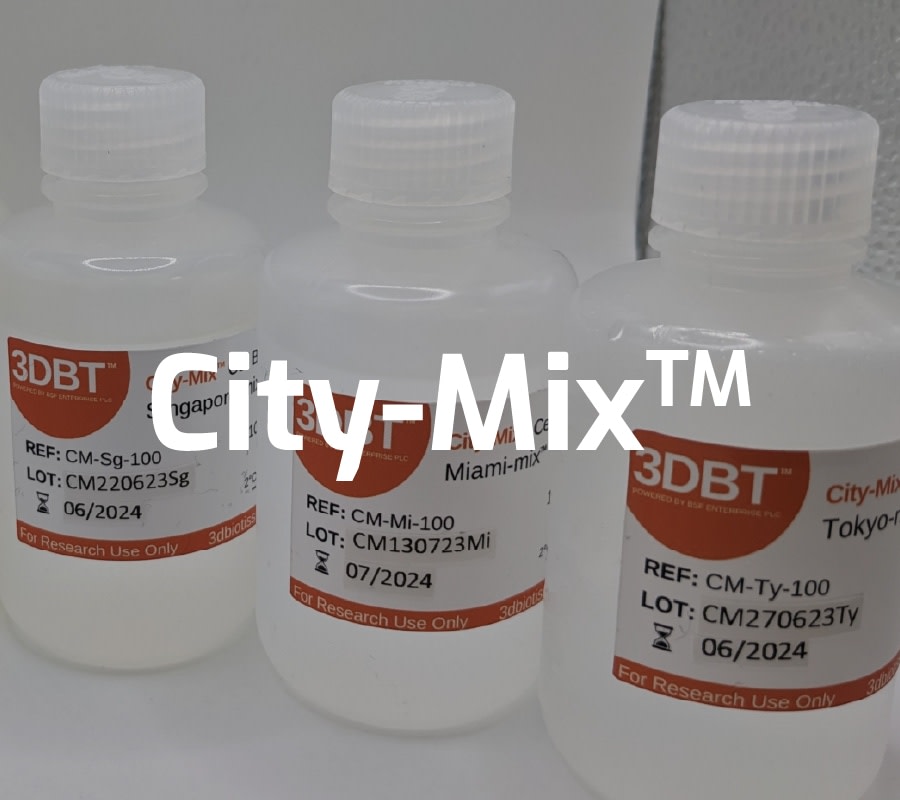
CityMix®
Macromolecular crowding supplement
A patented, non-toxic supplement that works as a macromolecular crowder. It takes up space in the culture medium, making growth factors more available to cells. That boosts performance across a wide range of cell cultures and can reduce reliance on expensive growth media.
CytoBoost™
Cell care range
Five formulations, each designed for a different common cell-culture need, to keep cells healthy and performing well.
Exploring cell-grown skin for robots
Robots are getting smarter and more agile, but they still meet the world through their outer surface. 3D Bio-Tissues is exploring whether its cell-grown tissue could give robot makers an alternative to the synthetic coverings they use today.
Today
Synthetic elastomers
Silicones, polyurethanes and synthetic rubbers cover most humanoid and autonomous robots. In continuous use they can wear and degrade, especially at the joints.
What we are exploring
Cell-grown tissue
3DBT’s platform grows tissue entirely from cells, without a scaffold. The research question is whether that tissue’s natural flexibility can hold up better where synthetic coverings are under most strain.
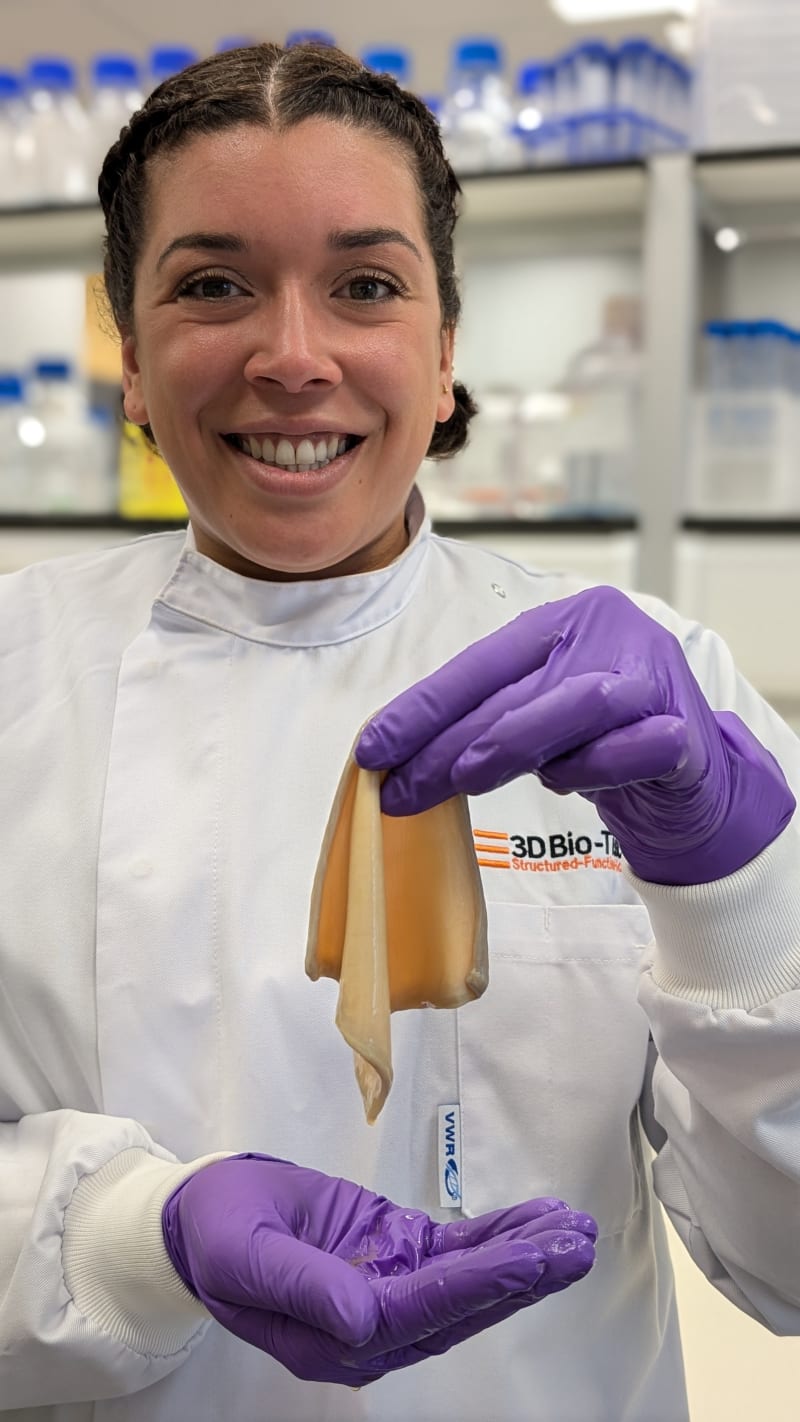
How we work with partners
The model is technical evaluations and joint development agreements. That keeps it capital-light, and 3DBT keeps full ownership of its patents and processes.
- Technical evaluations
- Joint development agreements
- IP stays with 3DBT
As robotics move into demanding real-world use, outer surface engineering is a foundational material challenge — and BSF’s tissue-engineering capability offers manufacturers a natural, bio-engineered alternative to legacy synthetic coverings.